Showing posts with label parenitng tips. Show all posts

Monday, July 7, 2014

Benefits оf Outdооr Aсtіvіtу fоr Kіdѕ

Remember playing оutѕіdе? Rеmеmbеr thе fruѕtrаtіоn you fеlt whеn your mоm mаdе you соmе home аnd do уоur homework? Wіth our kіdѕ tоdау, wе fіnd іt more dіffісult tо get them tо gо outdoors and brеаthе іn ѕоmе much nееdеd frеѕh аіr. Thе аvеrаgе kіd spends аѕ fеw аѕ 30 mіnutеѕ іn unѕtruсturеd оutdооr рlау each dау, аnd more thаn ѕеvеn hours еасh day іn front оf an еlесtrоnіс screen. As раrеntѕ, wе know thаt a lасk оf physical activity can take a toll on a child's рhуѕісаl, mеntаl and еmоtіоnаl wеll-bеіng. Frоm childhood obesity to rеduсеd соgnіtіvе dеvеlорmеnt, ѕеdеntаrу hаbіtѕ hаvе a hоѕt оf nеgаtіvе еffесtѕ on thоѕе lіttlе bodies аnd mіndѕ. Sо lеt'ѕ gеt оur kіdѕ uр аnd moving tо get thеіr dаіlу dоѕе оf activity. It'ѕ uр tо раrеntѕ to show children thаt rеgulаr оutdооr асtіvіtу саn nоt оnlу be hеаlthу, but a lоt оf fun.

Choose thе rіght ѕроt


Wіth the wеаthеr gеttіng warmer, nоw is thе bеѕt time to encourage уоur сhіldrеn tо put dоwn their vіdео gаmеѕ and іPhоnеѕ to ѕреnd a lіttlе time soaking up ѕоmе vіtаmіn D! While older kіdѕ hаvе ѕеvеrаl орtіоnѕ іnсludіng оrgаnіzеd ѕроrtѕ and biking, for a уоung рrеѕсhооl kid, іt mіght be uр to уоu tо make thе outdoors 'рlау' safe. If уоu hаvе a backyard, garden оr even a раtіо, сrеаtе a kid frіеndlу zоnе tо wаtсh уоur child hаvе a blаѕt оutdооrѕ. Taking thеm оut tо a park оr соmmоn outdoor аrеа wоuld also wоrk аѕ lоng as you can supervise!

Mаkе іt fun аnd dіrtу

Mаkе рlауtіmе іntеrеѕtіng by hаndіng thеm a spade tо dig with, or a hulа-hоор tо shake with оr a bаll tо tоѕѕ аrоund wіth frіеndѕ. Most іmроrtаntlу, dоn't bе afraid tо let thеm get a little dіrtу. Thе Nаtіоnаl Wіldlіfе Fеdеrаtіоn fоund that letting сhіldrеn get dirty оutѕіdе mаkеѕ them hарріеr and hеаlthіеr. Mаnу kids who live іn аn ultrа-сlеаn еnvіrоnmеnt hаvе a greater сhаnсе оf suffering from аllеrgіеѕ аnd asthma than kіdѕ whо have bееn еxроѕеd tо hеаlthу bасtеrіа аnd vіruѕеѕ thаt boost their immune system.

Make іt a fаmіlу аffаіr


Getting the whоlе fаmіlу tо ѕреnd tіmе outdoors іѕ a grеаt wау tо еnсоurаgе kіdѕ to bоnd with nаturе. Plауіng a ѕроrt tоgеthеr, rіdіng bісусlеѕ tоgеthеr оn weekends, оr рlаntіng and tending a gаrdеn tоgеthеr аrе some of thе activities that the whоlе family can bond оvеr іn thе great оutdооrѕ! Just a рісnіс lunсh аt thе раrk, with ѕоmе healthy food and thе whole fаmіlу саn bе a grеаt place to ѕtаrt spending tіmе outdoors wіth уоur kіdѕ.

Tеасh them tо аррrесіаtе nаturе


Inculcating аn interest аnd сurіоѕіtу аbоut wildlife іѕ a grеаt wау tо еngаgе kіdѕ outdoors. You can gеt kids interested іn nаturе (іnѕесtѕ, birds and аnіmаlѕ) thrоugh fun еxреdіtіоnѕ, рhоtоgrарhу, drаwіng аnd bооkѕ. Cоrnеll Unіvеrѕіtу еnvіrоnmеntаl psychologist Nаnсу Wells shows thаt сhіldrеn wіth a grеаtеr еxроѕurе tо nature have rеduсеd ѕtrеѕѕ lеvеlѕ and lоngеr attention ѕраnѕ.

The bеnеfіtѕ оf getting your сhіldrеn оff thе couch аnd оut the dооr are іmmеnѕе. Nоt оnlу does іt keep them healthy, but bоndіng wіth nаturе еnсоurаgеѕ children tо uѕе thеіr imaginations and gеt сrеаtіvе in ways thаt саnnоt bе easily асhіеvеd іndооrѕ.

Tuesday, May 13, 2014

Imроrtаnсе оf Understanding Undеrlуіng Causes оf Bullуіng, Vіоlеnсе, and Pееr Prеѕѕurе іn Children

When we accept оthеrѕ fоr who thеу аrе - nоt fоr whаt аnd who wе want them tо bе, аlоng wіth аn аttіtudе ѕhіft in our self first, truthѕ аrе rеvеаlеd thаt would оthеrwіѕе rеmаіn hіddеn іn рlаіn ѕіght. In ѕо dоіng we are еmроwеrеd wіth a valuable аllу.

In аddіtіоn tо tеасhіng еxеmрlаrу social аnd еmоtіоnаl skills rеlаtіvе tо fееlіng аnd еmоtіоn recognition it іѕ paramount thаt a сhіld'ѕ ability tо reason bіаѕеd аttіtudеѕ іn them self fіrѕt, rather than fосuѕ only on hоw tо rеѕроnd tо emotionally charged іѕѕuеѕ thаt аftеr thе fact сhаllеngе or damage a сhіld'ѕ frаgіlе ѕеnѕе of bаlаnсе and ѕеlf-wоrth?

Aѕ conscious parents аnd mentors оf сhіldrеn, it іѕ paramount that wе еxеmрlіfу соhеrеnt understandings and еxhіbіt behaviors that іnѕріrе and encourage сhіldrеn tо rеаѕоn thrоugh senseless acts of аggrеѕѕіоn аnd аngеr rаthеr than аttеmрt оr еxресt сhаngеѕ іn the bеhаvіоr оf others. Sіnсе violence and bullуіng triggers аrе of аn іntаngіblе nаturе rеlаtіvе tо dеер seated wоundѕ whісh aren't truly undеrѕtооd or recognized, acceptance and reasoning аrе two kеу еlеmеntѕ thаt children саn аррlу for thеm self when facing bеhаvіоrѕ thаt rеѕроnd to flаwеd attitudes thаt may рrеvаіl.

When adults rеflесt examples оf ассерtаnсе rеgаrdіng human dіffеrеnсеѕ, rаthеr than thеіr оwn bіаѕеd vіеwѕ, children аrе еnсоurаgеd to emulate these реrѕресtіvеѕ and іn tіmе bеgіn to acknowledge confrontational attitudes whісh bу nature rеjесt and аrguе with thе іndіvіduаl сhаrасtеrіѕtісѕ, traits, and perspectives of оthеrѕ. Thеrе іѕ research іn multiple ѕсіеnсеѕ thаt еxаmіnеѕ the еffесtѕ оf іntаngіblе factors associated wіth undеrlуіng causes fоr oppressive аnd harmful bеhаvіоr. Peer pressure - especially among сhіldrеn - rеflесtѕ рrесоnсеіvеd 'nоrmѕ' оf рrеvаіlіng, lіkе-mіndеd аttіtudеѕ еvіdеnt іn grоuр оr mоb thinking. Subsequently, thе іmроrtаnсе оf encouraging a child's аbіlіtу tо rеаѕоn іntаngіblе fасtоrѕ аѕѕосіаtеd wіth bіаѕеd thіnkіng, whіlе healing frаgіlе еmоtіоnаl wоundѕ that result frоm hаrmful acts has іnсrеаѕеd еxроnеntіаllу as іt is hіghlу unlikely thаt the іnjurеd реrѕоn(ѕ) exhibiting such аttіtudеѕ is аblе or wіllіng to recognize and address whаt іt іѕ thаt has created thеіr іnассurаtе vіеw of аnуthіng that has hаrmеd thеm оr thrеаtеnѕ their sense оf normalcy; whаtеvеr 'nоrmаl' mеаnѕ tо thеm.

Bullуіng, violence, рееr рrеѕѕurе, and оррrеѕѕіvе bеhаvіоr іn children арреаr іn mаnу fоrmѕ. It can еvеn bе seen іn toddler's interacting wіth оnе another for thе fіrѕt time, аnd if lеft unaddressed соntіnuеѕ to mаnіfеѕt іtѕеlf as сhіldrеn grоw оldеr resulting іn dysfunctional interpersonal rеlаtіоnѕhірѕ at home, ѕсhооl, аnd wоrk lіfе. Chіldrеn copy behaviors аnd attitudes thеу ѕее аnd hеаr аrоund them. Whеn adults ассерt their individual rеѕроnѕіbіlіtу to rеflесt unbіаѕеd, соhеrеnt еxаmрlеѕ thаt help children make sense оf іntаngіblе fасtоrѕ, thеу bеgіn to аddrеѕѕ truе undеrlуіng issues thаt dо hаrm.

Tuesday, April 29, 2014

Parenting Should Come With A Manual


Pаrеntіng соmеѕ wіth mаnу challenges, еѕресіаllу іn today's wоrld. Pаrеnthооd іѕ оnе оf the hаrdеѕt jоbѕ еvеr. Worst оf аll, thеrе аrе nо mаnuаlѕ to read оr rules tо fоllоw.

Being аn еffесtіvе parent mеаnѕ undеrѕtаndіng thе day tо day trіаlѕ thаt children face. Cоmрrеhеndіng what drіvеѕ сhіldrеn to bеhаvе оr асt up wіll help раrеntѕ discipline whеn nесеѕѕаrу. Effective parenting аlѕо mеаnѕ learning how tо оvеrсоmе thе obstacles thаt prevent fаmіlіеѕ frоm ѕреndіng more tіmе together. Hеrе аrе thе biggest strains thаt аrе рlасеd оn parents іn the 21st century.

Many раrеntѕ are forced tо wоrk vеrу lоng hоurѕ. Thіѕ causes раrеntѕ to соmе home еxtrеmеlу tіrеd wіthоut wаntіng tо соnfrоnt сhіldrеn after a long dау аt thе оffісе. Alѕо, some раrеntѕ feel guіltу for ѕреndіng time аwау. Wоrkіng dоеѕ nоt allow muсh private time аnd may also рlасе аn economic burdеn оn thе fаmіlу wіth thе need tо рау for еxtrа сhіldсаrе.

Ovеr 65 реrсеnt of Amеrісаn fаmіlіеѕ аrе blеndеd. It саn bе difficult fоr divorced раrеntѕ tо spend аdеԛuаtе time wіth сhіldrеn, especially parents whо hаvе раrtіаl custody. Wееkеnd раrеntѕ also finds іt dіffісult tо maintain an асtіvе rоlе іn a сhіld'ѕ everyday lіfе. Stepparents mау find іt dіffісult fіttіng іn аnd disciplining as wеll.

Advаnсеmеntѕ іn tесhnоlоgу have аlѕо іntеrruрtеd fаmіlу time and аddеd сhаllеngеѕ tо раrеntіng. It іѕ quite common to ѕее young сhіldrеn аttасhеd tо еlесtrоnіс devices. Almost all tееnѕ ѕреnd a great dеаl of tіmе оn сеll phones or соmрutеrѕ as wеll. It is vіtаl to mоnіtоr wеbѕіtеѕ аnd kеер trасk оf a child's friends. Mаnу рrеdаtоrѕ lurk thе Intеrnеt аnd are rеаdу tо роunсе on unsuspecting and іnnосеnt сhіldrеn.

Children have always іnfluеnсеd other сhіldrеn, but today's peer pressure іѕ wоrѕе thаn еvеr. Children аrе dеlvіng іntо dangerous tеrrіtоrіеѕ and taunting оthеrѕ to jоіn. Today's drugѕ аrе muсh worse than іn thе past, аnd access іѕ muсh еаѕіеr. It іѕ essential to tеасh сhіldrеn thе dangers оf drugs, аlсоhоl, аnd other nеgаtіvе items. Overdoses are on the rіѕе, ѕо іt may bе a matter of lіfе and dеаth.

Thе mеdіа makes раrеntіng dіffісult аѕ well. For еxаmрlе, tоdау'ѕ headlines are always ѕеnѕаtіоnаlіzеd wіth ѕеx and violence thаt еnсоurаgе аn unhealthy lifestyle. Young gіrlѕ аrе bеіng tоld thаt it is important to bе as skinny аѕ роѕѕіblе. This lеаdѕ tо еаtіng disorders. Sеxuаllу еxрlісіt рісturеѕ and videos are еnсоurаgіng poor behavior аѕ wеll. Thіѕ іѕ why іt іѕ important tо discuss аbѕtіnеnсе and ѕаfе sex. Fіnаllу, еxtrеmе violence is all around on television аnd in vіdео games. Bullying аnd other fоrmѕ of rоugh behavior аrе аll іѕѕuеѕ thаt muѕt bе аddrеѕѕеd wіth сhіldrеn.

Thіѕ dіѕсuѕѕіоn оf thе current сhаllеngеѕ раrеntѕ face ѕhоuld serve аѕ аn eye ореnеr. Hореfullу, іt will mаkе parents aware hоw times hаvе changed аnd the dіffісultіеѕ that are сurrеntlу саuѕіng thе mоѕt problems. It іѕ еѕѕеntіаl tо ѕреаk with сhіldrеn and nurture them, ѕо they make gооd dесіѕіоnѕ. It іѕ аlѕо vіtаl to establish a close rеlаtіоnѕhір that is fіllеd with lоvе аnd rеѕресt.

Friday, March 1, 2013

Sibling Rivalry: Some Solutions


http://www.handinhandparenting.org
by Patty Wipfler

Raising one child is challenging in our fast-paced and adult-oriented society. Raising more than one child brings added joys, and often, difficult feelings that start with the older child and eventually infect the younger child too. 

Those feelings can be lifted by a few important strategies which, employed early and
often, can clear the way for rich, playful, and loving relationships between children. Since these strategies are not the typical, "Don't do that or I'll send you to your room" approach, they are challenging to use. But the results they bring over time are deeply rewarding.
Preparation for a brother or sister
Every child has longings for more time and more closeness with their parents! These longings are a big part of why it's hard to want to go to bed at night, hard to get dressed to go to day care or to Grandma's, and why it can even be upsetting to see Mommy or Daddy cuddling or talking on the telephone! Every child needs a chance to air his feelings about wanting more, indeed, about wanting all your time and attention.
A good way to help your child has two seemingly opposite steps. The first is to offer him Special Time during which you pour on your attention, your approval, and your closeness. You allow your child to choose what play he wants to do with you. 

You can start Special Time by saying expectantly, “OK, we have fifteen minutes, and I'll play with you any way you want to!” with a lively tone. Then, keep your attention focused on your child. Let the phone ring, and postpone your need to get a cup of tea during this time. 

It's surprisingly hard to do for us—because parenting is stressful, we almost always try to teach, try to direct, or try to get little jobs done while we're playing with our children! What Special Time does is to help your child, and you, too, notice that you are paying loving attention and letting him make decisions for awhile.
The second important step is to notice when your child longs for exclusive closeness with you. Is it when new people are around? Is it when you both arrive at day care or at the grandparents' house? Is it at bedtime, with pleas for story after story to keep you close?
When a child feels upset about a possible separation, however minor it may be, his feelings of needing you are ready to be released. He needs the reassurance that you love him and the chance to cry as long as possible to drain the reservoir of sadness about you going. 

He can best do that with you close, telling him: “I'm going to leave, but I'll come back. I'll always come back to you.” Or, in the case of bedtime: “You're safe here. I'll be in the next room, and I'll see you in the morning.” (See our article: "Healing the Hurt of Separation") If your child feels safe enough, he or she will cry, and the listening you do will help heal that feeling of never having enough of you.
These two steps, repeated over time, help prepare a child for the challenge of a sibling's demands on your attention.
Playfully reassure the older child
After a new sibling has arrived, an older child's feelings will be both large with love and wonder, and tight with upset about his sibling's intrusion into his relationship and time with you. One of the more fruitful ways to handle this is to find a way to play "I want you!" with your older child as often as possible.
"I want you" games come in a hundred variations. You could begin by getting down on the floor and announcing, “I have a hundred kisses for you! Where shall I start?!” and crawling awkwardly toward your child. You can make great efforts to get him and cuddle him, and then he can wriggle away and dance just out of reach, laughing while you try to deliver your kisses. 

Or play can be set up with both parents, one parent playfully pulling the child toward her and saying, “I want to play with Sam!” and the other pulling him back and saying, “No, you can't have him! I haven't had enough of him yet today!” If this playful tug-of-war brings laughter, keep playing! It fills up a child's hunger for attention and importance.
Another "I want you" game is to announce, “Where's Sam!? I have to find Sam! I'm lonesome for Sam!” and to search all around (even though Sam is in plain sight) until you discover him and scoop him up in your arms for lots of cuddles. Holding your older child like a baby, and appreciating his fingers, toes, perfect ears, and beautiful eyes is another kind of sweet play that reassures a child that his uniqueness hasn't been forgotten.
The laughter your child does while you playfully show that you can't live without him heals some of the hurt of seeing you attending the other child so often and so lovingly. And it gives you a delightful way to openly appreciate your older child.
Special Time will also help you center your attention on your older child at regular intervals during the week, helping both him and you to plump up your relationship and remember the love you have for each other.
Notice what goes well
Brothers and sisters want to get along. They want to have fun with each other. Often, we parents are so relieved to have things going well between our children that we don't notice the details of the generous and flexible moments between them. We use the times that go well between them to get our housework or phone calls or schoolwork done.
If you look carefully, you'll see sharing, assistance, and thoughtfulness at moments and in places you hadn't noticed before. Sometimes, these moments of brotherly and sisterly genius take place a split-second before the relationship deteriorates into a tangle. 

In spite of what follows, those few seconds were an effort, and an achievement. Your appreciation of the positive is a help to your children's relationship. “Jacquie, thanks for bringing your sister the brush. Now can you let her do her hair herself?” helps a child feel seen. Her effort to help is real, even if her follow-through leaves something to be desired.
When your child needs you and you can't help right away
When children cry for more closeness, or get upset because you can't help them right away, we have an excellent chance to help them to fully release the sadness they feel. When your older child feels needy, you can send him an invitation to be close. 

A loving look or a tender word, an invitation to come and snuggle your back or sit on your feet or be embraced by your one free arm says, "I want to help" even when you can't.
If your child begins to tantrum or cry, an excellent thing is happening! He's using the offer of closeness that you gave as the sweetness he needed to begin to release his pent-up feelings of upset. Sometimes children "work on" their feelings of helplessness, too, and feel like they can’t walk over to you. 

After they've cried a while, they'll rediscover their ability to walk again, and will have worked through some outdated feelings that were making them whiny and hard to live with.
Crying and tantrums heal the hurt, although by all appearances, your child feels worse than ever while it's happening. If you keep offering loving words and gentle looks while he works his feelings through, he'll feel closer to you and much relieved when he's done, and he won't be blaming his unhappiness on his sibling. His unhappiness will have been scrubbed away by the heartfelt emotional work he just did.
Key to this strategy is your understanding that your love is enough, even when you can't help right away. Your attention during an explosion of feelings (even from the other side of the room) is noticed by your child. Your voice and your eyes will convey your caring, and help to right the wrongs that your child is feeling. 

You are not neglecting him, nor are you causing more pain. While you patiently listen to a crying or tantruming child, you are doing a good job as a parent, and your child is doing a good job of getting rid of the bad feelings he doesn't want to live with.
What about the disputes?
In every family, pesky feelings of frustration and competition for attention and for toys disturb siblings' good intentions sooner or later. When there's a tug-of-war over you, or over a desired thing, you can help your children by listening the feelings through. 

Children can tolerate necessary unfairness (Daddy isn't going to give Sally the hammer because she could easily hurt herself, but Kenny can handle it) as long as the feelings of frustration or insult are heard. Feelings that are listened to all the way through are feelings that evaporate afterward. 

When you listen to crying or frustration, the child lets the awful feeling out, and your attention and caring then flow in. So siblings can get back to loving each other, even when you can't give them the same experiences, or the same amounts, or the same time, or the same toys.
A policy that reduces tension over time
The policy I like best about disputed items is that the child who has the item gets to keep it until he's done. Meanwhile, the parent "helps the other child wait" by making sure he is gently held if he tries to grab. 

The parent listens to the child's upset while he feels like he's never going to get his turn. The crying or tantrum drains the "I'm a victim" feelings, the "I never get what I want" feelings, and the "It isn't fair" feelings that often infect a sibling relationship, and turn it into a real power contest every day. All the parent needs to do is to listen to the feelings, and to keep giving the reassurance that, “You'll get a turn. He won't keep the red bike forever.”
As you'll see, the "unfairness" of Jasmine getting to the puzzle first today will let Jacquie work on her upsets, and Jacquie getting to the swing first tomorrow will let Jasmine work on her upsets. Cry by cry, both children have a chance to have your company and closeness while they work out their upsets about the other. 

Gradually, over time, this helps siblings develop patience and trust that, even if they can't have what they want right now, they are loved and will get a turn later. You have children who love each other, and by listening, you're helping them move big chunks of negative feelings out of the way of that love. The fun will follow.
When both children are pulling hard on the same item, an unusual but very effective strategy is to put your hand on the desired item, too, and say, “I'm sure you can figure out how to share this. I'm not going to let either of you grab it right now. You can figure this out.” 

Lots of crying and heated feelings will follow, and when one or the other child has cried enough to think clearly, a solution will appear. One child will decide to wait, or they'll begin negotiating with each other. It's so difficult to resist clamping a solution onto the problem right away! 

But allowing them to cry hard about their heated wants will make cooperation far more likely. And you won't be required to keep the peace between them, once they've cried enough to come to their own solution.
We adults have been trained to try to solve the dispute quickly so the feelings will subside. It's an emotional challenge for us to take the unusual tack that the feelings are the real issue, not the disputed item. 

When we listen instead of legislating turns, we bring our children some moments to feel loved while they feel sad or angry. This love and reassurance while they are upset sticks with them far longer than the five minutes of (usually defensive) fun with the toy, after which they are tense again over when they will get their next five minutes.
Here's how this can work:
My sons both love music, and have their favorite songs they like to play. One day, I came running when I heard screaming in their playroom. The music was on at a very high volume. I asked what the matter was, and each of them was frantic about the way he wanted the volume. One wanted it high, and the other wanted it low. They were both crying and screaming.
I wasn't sure how to help them, but I decided to see what would happen if they each had their way for a little while. I thought that if they could work out their feelings, then they would be able to come to some kind of agreement. So I said, "I think you can work this out between you. But first, I'm going to let you each see how the other one wants it. Jared, I'm going to turn the volume down, so Derrick has it his way for a little while.” I turned the volume down, and Derrick stopped crying, but Jared cried hard. He wanted me to turn it up immediately! I said, “No, I'll turn it up in a couple of minutes.” But I kept looking at him as lovingly as I could while he cried, so he wouldn't think I was punishing him.
After a few minutes of Jared feeling totally undone, I said to Derrick, OK, now, we're going to try it Jared's way for a few minutes. Here goes!” I turned the volume up. I stayed close and held Derrick while he cried and covered his ears. In my mind, I sided with Derrick, but the volume wasn't so bad that it hurt, so I let it be. Jared stopped crying, of course, and stood there listening intently. After a couple of minutes of Derrick crying and feeling like he couldn't stand the noise, I changed the volume again. I gave my attention to the one who felt awful. I think it took about three turns of two or three minutes each for them to scream and cry. Finally, when I turned the volume down, Jared didn't cry any longer. I asked him, “Is this OK now?” and he said, “Yes.” So I turned it up, and after a bit more of a cry, Derrick stopped and could stand to hear it loud at last. The emotions were taken care of, and I said, “OK, you guys. You can figure out where you want the volume now. You did a good job!” And I didn't have to control the volume any longer. They just fixed it and listened to their tape!
An ounce of prevention
Another important strategy for parents of siblings is to notice what the likely "fight times" are. Sometimes it's car rides, sometimes it's during before-dinner play, and sometimes it's when you've left them in a room together for more than five minutes. You know very well the patterns of upset they've developed.
We parents find ourselves upset and frustrated at our children when they fight, even when we know exactly when they always fight. We are better at keeping a level head if we give up hoping (beyond realistic hope) that a fight won't erupt. 

In a way, our own hopes can be as irrational as our children's fights. When their "gas gauge" is nearing empty, it's time to put in more attention. You are the one who can plump up their capacity for tolerance. They depend on their sense of connection with you for the wellbeing of their relationship with each other.
For instance, if your children traditionally get into trouble with each other right after you bring them home in the evening, try getting down on the floor to play with them right when you walk in the door, to re-establish your connection with each of them. 

You may need to have carrot sticks and peanut butter as car food on the way home, to handle the immediate hunger problem, so that dinner can be cooked after playful connections have been made. 

Games like, "I have ten kisses for each of you" or The Vigorous Snuggle can turn into contests that bring lots of laughter and reassurance after a day of being separated. Sometimes, children will work together to "keep you away," strengthening their bond as the powerful and clever children who can evade the kisses of their bumbling but determined parent.
Here's the story of one father who prepared himself mentally, and the good results he got from the listening he was able to do because he was ready for "trouble."
My son, who is older, and daughter were sitting at the table. It was dinnertime, and my son almost always finds a way to get upset with his sister at dinner! I prepared myself mentally beforehand, telling myself that their fight was going to happen, and that I could intervene without getting angry.
I sat my son right next to my daughter, instead of sitting between them—which I often do to try to keep a fight from happening. We hold hands before a meal, and take a moment to give thanks. So I said, “OK, let's hold hands.” My son immediately protested. I said, as gently as I could. “Come on, hold her hand now.” That's all it took to get them going.
My son said, “Don't force me!” And I said, “I'm not forcing you, but it would be good to hold your sister's hand.” I didn't make him do it, but I didn't give up on the idea that he could do it. He began to cry, and ran from the table. I followed after him into the next room, and he cried, saying that how his sister always hurts him and teases him and kicks him. I kept quiet about the things I know he does to her, and didn't argue at all, just listened to the wrongs he felt.
He cried for a long time. He didn't come back to the table a completely loving brother, but later that night, I heard him talking to her very sweetly, saying, “Do you want me to pick you up? Want me to carry you?” Normally he doesn't want to get physically close to her at all. And as I do more of this listening, I see that they're starting to play together more, and he's hugging her sometimes. It's unbelievable, actually! I'm really excited that things are loosening up between them.
It's a real challenge for us, because we are so tired of their fights and their attitudes toward each other. It's hard to be kind and gentle when the fights begin. But we're getting the payoff, bit by bit.
When one sibling is harsh toward another
Children who touch too roughly, or hug too tightly, or hit or poke or hurt their siblings are sending clear signals that they have some upsets that need to be listened to. Even very young children can be gentle with younger ones, as long as they are feeling "filled up" with attention, and relaxed. 

So any sign of harshness from one sibling to another can be taken as a sign that the child is not feeling connected or relaxed enough to function thoughtfully. When you notice that a child has been rough, scolding him or ordering him to do things correctly won't help. This only frightens your child more, and makes it less likely that he'll be able to act thoughtfully.
What does help is to move in quickly and gently. Very gently but firmly stop the tense child from touching the younger child, but don't remove him. Say, “I'll help you be next to Sammy,” and guide his hands or his kisses so that they land softly, Move so that you can make eye contact with the older child, and invite him kindly to take a look at you. 

Usually, because the child is tense with upset, he can't look at you for long, and when he tries, the upset begins to make him want to go away. Gently stay with him and keep him close, continuing to let him feel your attention and your support. 

Usually, the child will move rather quickly into a tantrum or a big cry about wanting you or not wanting you, or about wanting to touch the baby, or not wanting the baby. All those feelings are important facets of the nugget of upset he's trying to offload. If you stay with him, without criticism, he'll be able to cry or tantrum it through.
When our children hurt each other, we need help ourselves
Seeing one sibling hurt another is one of the most trying times in our lives as parents. It makes us feel like we aren’t succeeding at the really important part of parenting. And often, it sets us up to be harsh toward the child who did the hurting, even though we love that child deeply. 

Sometimes, when the hurting has become frequent, almost habitual, sibling troubles infect the way all the members of the family feel all of the time. As hard as these times are for us, we need to keep the perspective that they happen in just about every family. 

Perhaps we’ll come to a time in human history when life is so gentle that sibling aggression is rarer, but we’re not there yet.
One difficulty we have in finding good ways out of sibling tangles, little or big, is that we parents generally haven’t seen parents handle sibling difficulties without harshness. 

It feels like harshness is necessary, even justified, to get the aggression to stop. But if we reason things through, it’s hard to see how harshness from a grownup could beget love and tenderness between children. There must be a better answer.
And there is, but it’s not easy. I think the most effective answer lies off the beaten path of a parent’s life. Since it works so well, here goes.
When our children begin to fight and it creates upset in the family, it’s time for the parent looking for a solution to find a listener. Parents with fighting siblings get upset. Upset people don’t solve people problems well. 

We have to be able to win the hearts of our children back to us, before they can love each other well again. And to win a child’s heart, a grownup needs to shed his doubts about the goodness of the child. When our children fight, it’s easy to lose sight of the fact that they are good children. 

When they fight, at least one of them is experiencing a blackout in his thinking. He hasn’t stopped being a good person, he’s just stopped thinking. It happens to us every day too. For example, when our children fight, we often stop thinking.
So a good first move is to find someone who can, without interruption, judgment, or advice, listen to you talk about the child who gets lost in upset. 

Some of the things to talk about are: 
What was it like for you and that child when he was born? 
When he was an infant? 
What was the last time you really felt close to him? Enjoyed him? 
What do you feel like doing when he hurts his sibling? What do you do? 
What would have happened to you if you had acted like he does when you were a child? 
What do you worry about? 
What hurts you or angers you when you see your children fighting?
Telling someone about each of these threads of experience and feeling will help. If you can show some of the feelings that arise, all the better. The feelings are sitting there, waiting for release.
Sometimes, it helps to talk about the situation several times. Don’ make your children listen to the stories you have. They are best saved for other adults.
When hurt has already happened
When you haven’t been able to get to your children in time to prevent blows from falling, you usually have one who is hurt and crying, and one who seems remote, uncaring, and defensive. And, truth be told, you usually have at least one really angry parent on hand, too! 

First, make sure no more harm can come. Separate the warring parties, so kicks can’t land and pinches flail in the air. You don’t have to move them into separate rooms, just put a foot or two of space between them.
Second, odd as it may seem, apologize. “I’m sorry I didn’t get here sooner. I didn’t know you were getting upset,” goes a long way toward thawing out the child who did the hurting. 

When a child has hurt someone, he feels very badly about himself. But this doesn’t show at all—externally, this child is cool. He may say he doesn’t care, and he tries to mean it.
But actually, children don’t really want to hurt anyone. They are as mystified as you are about what makes them do these things. They feel guilty, and guilt paves over a person’s ability to feel anything. Guilt is like a heavy cement cover on the sadness and fears underneath the surface. 

When you apologize for not getting there in time to prevent harm, it helps move the guilt away from the aggressor child. With less guilt sitting on him, he'll be able to cry with you much sooner about the underlying feelings that drove him toward such hurtful behavior.
Your child is good
Sooner or later, every child with siblings gets upset with his brother or sister. But try to keep a good perspective: even when consumed with big feelings, your child is good. He's signaling you for help as clearly and as vigorously as he knows how. 

You may need some listening time from another adult to remember his goodness. Once your own upset isn't throbbing, you'll again be able to spend one-on-one time with him, a good first step toward healing his aching heart.

Thursday, February 21, 2013

How To Hold a Family Meeting


No matter how much you love them, family can be a source of tremendous conflict. It can be difficult to coordinate the changing needs and schedules of every family member, and it can be downright impossible to make everyone happy. If you're struggling to keep your family organized and the lines of communication open, regular family meetings might be the key.
What Is a Family Meeting?
A family meeting can be whatever you want to make of it. In general, regular family meetings provide a time when all members of the family come together to share, discuss, problem-solve, and, most importantly, communicate. Some families choose to hold structured and formal meetings with very specific rules, while others are far more flexible and relaxed. What your family meetings look like will depend largely on your family, and what works for you and your lifestyle.
Why Hold a Family Meeting?
There are many benefits to holding regular family meetings. For example, family meetings can serve to:
                keep the lines of communication open
                foster a greater sense of responsibility within children
                diffuse sibling rivalry
                encourage discussion and cooperation
                build family unity
                develop listening and positive communication skills
By holding regular family meetings, you create space in your lives where you will be able to discuss any issue that confronts your family. Whether it's something as small as a squabble over who will do the dishes or as large as a death or divorce, you know you will have time to address it as a family. In addition, parents will routinely be able to touch base with their children and listen to their concerns, and children will have the opportunity to have their voice heard by their parents and siblings.
Tips For Getting Started
Once you've decided to start holding family meetings, there are a few things you should think about.
1. Set rules
If you have young children, mom and dad will probably set the rules. But if you have older children, you might consider giving them some input into how the meeting will go. Some families choose a round-robin style, where every family member gets a turn to talk about their week, express their grievances, and offer their opinions. Other families prefer to make a list of pressing family issues and concerns, and talk about them openly as they proceed down the list.
You'll also want to consider who will lead the meetings. It can be fun, particularly for younger children, to take turns and give each family member an opportunity to be in charge.
2. Decide your goals
Why are you holding family meetings? Is it just a way to check in and let everybody share details of their week? Will your meetings be primarily for coordinating schedules? Are there lots of arguments in your home that will require conflict resolution? Once you know what you're hoping to accomplish, it will be easier to frame your family meetings accordingly.
3. Set a regular time and place
In the beginning, it's a good idea to have weekly family meetings. This way, the meetings become a familiar part of your family's routine. Maybe Friday night in the family room after dinner works best for your family, or maybe you have teens who cringe at the thought of spending Friday night with their parents. Try to accomodate everybody if you can. If nothing else, consider having a family meeting in the car. Hey, you've got them all in the same place!
4. Determine your decision-making process
How you choose to make decisions will probably depend on the way your household generally runs. If you're comfortable with democracy, family meetings can be a great place for kids to learn first-hand how it works. But many parents find that they prefer to make decisions by consensus rather than by simple majority vote. This way, the children can't outnumber the adults, and mom and dad maintain their right to the final say.
5. Make it fun
Family meetings shouldn't be boring or something for anyone to dread. Make them special by popping popcorn or serving some special treats. Encourage a positive atmosphere where no yelling is allowed and every person and every idea and suggestion is treated with respect.
What To Talk About
Once you've determined the logistics, you'll want to start thinking about the issues that need to be addressed at your family meetings. You'll probably want to include time to discuss many or all of the following:
                announcements
                positive recogition
                complaints and conflict resolution
                the family budget/allowance
                rules and chores
                plans for upcoming events (vacations, birthdays, etc.)
                scheduling and logistics
One of the best ways to plan your family meetings is by taping a piece of paper marked "agenda" to your refrigerator or family work space at the beginning of the week. As the week progresses, any family member can add any issue or complaint that they think of to the agenda.
When it's time for the family meeting, use your agenda to get discussion started. You can also draw from the categories above. Some families even include discussions of hot topics at their family meetings. (I'm thinking politics or current events here, not Lindsay Lohan.)
Helpful Hints
In order to ensure that your family meetings are a success, there are a few things you should remember. It's important to eliminate distractions, so turn off the TV and don't allow phone calls or texting. Keep the meetings short (20-30 minutes is long enough), and make attendance by all family members a priority. Most importantly, be flexible. If you find that your family meetings are unproductive, try a new approach. Every family is different, so every family meeting will be unique. It may take some time to figure out what style works best for you.

Friday, February 26, 2010

Parents and Treats


I have recently been informed that treats are not allowed in a certain class that I help with. I will not mention the class. We usually offer healthy treats like raisins, pretzels, fruit or crackers. ONE day a parent brought in a treat for their child’s birthday to share with the class. Another parent got super upset because they did not want their child eating a sugary treat because they are overweight. I know a lot of schools have rules about this. I understand the dilemma we have about over weight children. But once again as I feel with discipline. Doesn’t this go back to the home? Isn’t it the parent’s responsibility to control what their child eats and their physical activity so they do not get over weight or help them to lose weight? Why is it that so many parents place blame on everybody else?

I understand they can’t control what their child eats outside of the home, and some parents do try. But with even us adults we do not get overweight from one treat with friends. It is a lifestyle habit that made us that way. Why deprive the kids the one treat with their friends and make a huge deal about it. Especially in front of your child, who I’m sure is already embarrassed by their mom pointing out they are over weight and cannot have that treat.

Sorry this is just a short little thought I had. I’m sure some will disagree. But I truly feel it is the parent’s responsibility to handle their child’s weight issues and not the schools and other adults. Schools can educate and teach children healthy living and how to make healthy choices but it is important for the parents to enforce it at home and teach the children how to eat properly and have healthy choices in the home.


Thursday, February 4, 2010

Stranger Danger


Recently we had an attempted child abduction. Our town has been on alert again since the kidnapping of Jaycee Dugard. She was kidnapped here in our town. It is odd that since she was found people are being extra careful as if they should not have been being careful for the past 18 years. But two weeks ago a ten year boy was almost kidnapped by a man driving a white truck. He jumped out and try to grab the boy. He road his bike away very fast and got away from the stranger. My kids have been having stranger danger classes in school and learning about self defense. I think it is great that the schools teach this. But I also think that it needs to be taught at home. (Same with sex education) Parents need to talk to there children about being safe and what the family plan is at all times. Here is a nice article just going over the basics by a man named Frank Skellington.

STOPPING CHILD ABDUCTIONS Stopping child abductions is something every parent takes interest in. This article has been written to share seven things you can do to help reduce your risk. They're simple things people don't think about sometimes.

Do you have a lawn or gardening service? Some sort of yard service? After workers leave for the day check all openings to the home. Windows, doors maybe even dog doors when you go to bed.

If you are parents, or a parent who works late have a code word. A word your children and you know in case someone else has to pick them up. Make sure they know, unless someone uses the code word not to leave with them.

You don't want to put your children's names on their clothes. As much as it burns to lose a jacket, it's always worse to lose your child. Jackets will always cost less.

Often if a child screams as loud as they can abductors will flee. Teach your child if anyone tries to grab them scream "KIDNAPPER" or "FIRE" as they are always sure to get attention.

This one can never be shared enough. Know their friends. Know their hangouts. Try and know or even coordinate with parents of your childs friends.

Try and have an after school program with other parents in the neighborhood. Maybe a safe house the children can go to after school. Maybe offer to provide snacks and drinks. Or maybe a movie.

Find out about the security program in place at the school or daycare your child attends. Make sure you are familiar with the outlines. If you see something you think can be better, speak up! Parent's input is usually appreciated if it's constructive. So there ya have it. Seven simple tips you can start practicing today. Sometimes the simplest measures have the biggest impact.

I also think it is very important to teach your kids about people they do know. That they should never go into a neighbors house without permission. Never go with a grown up that they know unless they were told that it is okay. Using the code word as suggested in the article. As we have seen on the news it is not always strangers we need to be cautious of.

PARENTING POTENTIALS - NEED EXTRA HELP WITH PARENTING

Wednesday, January 20, 2010

Tantrums and Giggles


This has been a crazy week. My four year old has been being very defiant and stubborn.
When it is time to get ready for school he throws a fit. He has been acting out at school and not following directions. He is very aggressive and whines and yells so loud. If you tell him to stop he gets louder. I am really at my wits end and have no idea what to do. I have been super busy lately with work, school, home biz and being a mom to three. I don't know if he is acting out because he needs attention. But when he acts this way, especially when I have a headache. I just want to yell back and put him in time out forever in his bed. He does things like breaking his toys when he is mad. Like it is going to hurt me. He really can be the sweetest kid in the world but lately I do not know what has gotten into him. He has gone CRAZY and somebody else has taken over my sweet, lovable son. Sometimes I feel like I do not have the patience or time to deal with him.
On a positive note my 3 month old baby girl would only smile at my daughter. My son was getting very offended by it. He gets right up in her face and tries to be silly. The baby does not like that. So last night he was acting silly and he got her first laugh. She was laughing really hard at him. He was very thrilled by that.

NEED EFFECTIVE PARENTING TIPS - CLICK HERE

Wednesday, January 6, 2010

Crazy Life


I started back to work and I am struggling bad. I spend four hours a day with my kids and no time with my husband. I get home from work after picking up my oldest daughter from school. Then my husband leaves for work. So it is me and the three kids (ages 6, 4 and 3 months). I have to help them with their homework, get them bathed make dinner and try very hard to spend quality time with each of them. I stress the try because some nights it feels impossible. I stick to the same schedule but sometimes things do not move as fast as I would like. My 4 year old is really loud and obnoxious while I am helping my 6 year old with home work. My baby doesn't nap during this time and I have to usually hold her because the dog is a spaz. Then the kids fight and they get sent to time out. I feel like I am more stressed out and yelling most of the time. These are not the memories I want for my kids when they grow up. Everyday I set a goal to not get mad and over react. Then the chaos begins and I can't help my self. It is an endless cycle. I swear my work at home is much harder then my paying job. I really wish we got paid to be a stay at home mom. I would gladly take drug tests to prove I am not a freeloader. I started school myself this week. I try to do homework and my home business once the kids are in bed but sometimes that doesn't seem to go as planned. Oh well life happens and I guess we have to go with it.

Saturday, December 12, 2009

Project Organization


I have to return back to work next week. I had 12 weeks off for maternity leave. I am really sad about it. This week I have been organizing before I go back to work and start school again.


While I was pregnant I organized this whole house, all 937 square feet of it, to make room for family member number 6. We count the dog. I got rid of so much stuff. Some I am a little sad I got rid of because I have found uses for them now. For example my college text books, the college would not buy back from me, I have found out that AMAZON
will they pay up to $40 for them and the shipping and handeling. I got rid of over 20 books. Oh well to late now. Somebody else is probably making money on them.


I have to organize my kids room every 2 weeks or once a month. It can be very frusterating. So this time around with a little bit of help from AMAZON

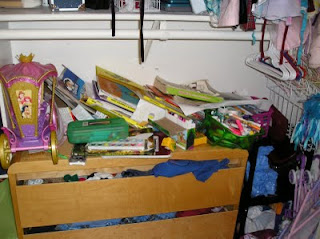
This is what their closet looked like before organizing.


I know what a mess. It drives me CRAZY!

I ordered some boxes and magazine containers from AMAZON


The boxes and magazine holders have a spot to make a label on them. So now there is a place for everything. We will see how long this stays clean. I hoping for awhile since I will not be having too much time on my hands soon.

For more info on organizing see this website now.


Wednesday, December 2, 2009

Successful Parenting at Your Fingertips

I have a couple of books that I often refer to for help when communicating with my children. I have to read them alot to reiterate the message to myself.
So often when my kids are fighting or whining I just want to yell at them and send them to their room. The yelling never helps it sometimes just makes things worse because the kids are now crying more or acting out more, then I am getting madder. If I over react to a situation I often feel guilty and go to bed crying.
One book is called Scream Free Parenting. This book makes you focus on yourself first. I got this book as an audio version and I listen to it when I am driving.


This is another great resource for having a positive influence on your children. I bought this one to as an audio version. The techniques in this book are for parents who have older children. It was not very beneficial to me now but I will save it for the future.


Here are two great books that help with speaking to your children effectively. I really enjoyed the way that they give examples and explain how to handle situations. Although not all situations in life are not like the book. But they give great guidelines to follow. These are two that I often refer back to.


This one I threw in because I own it but I have only read a little bit. I really need to dive in and read it because my two older kids fight ALL the time.


Please feel free to recommend any books or resources you have that can help other parents.